Start here: planning skullcap for beds or pots this season
If you want reliable calming herbs in your garden, planning when and where to place skullcap plants makes the difference between an ornamental patch and a steady supply for herbal preparations. Scutellaria species can adapt to garden borders and containers, but success depends on matching species to site and scheduling propagation so stock is ready for summer sales or personal harvests. For example, some small nurseries plan propagation to have plants available by mid-summer; one grower even notes stepping up dispatches from 10th JULY as seedlings mature.
Decide early whether you want American skullcap for moist borders or Baikal skullcap for a more herbaceous, medicinal bed, and allocate space or container volume accordingly. Containers allow easier soil control and winter protection, while beds suit larger clumps and naturalized plantings.
Choosing species and basic botany for garden selection
Skullcap is a genus with many species that vary in size, habit, and preferred conditions. Common choices for home growers are American skullcap (often used in traditional North American herbcraft) and Baikal skullcap, valued for its high-flavone roots. For a concise botanical overview of the genus, consult the Scutellaria genus overview on major botanical references — this helps when selecting species for climate and intended use: Scutellaria genus overview.
Botanically, Scutellaria species produce square stems and small tubular flowers that attract pollinators; root habit ranges from fibrous to rhizomatous, which affects how you divide and propagate clumps. Identify plants by leaf shape and flowering habit before committing them to mixed borders or medicinal beds.
Practical cultivation and container gardening techniques
Soil and drainage are the top priorities: most skullcaps prefer a humus-rich, well-draining medium with consistent moisture but not waterlogging. In containers use a loam-based potting mix with added compost; a 10–20% grit or perlite improves drainage for root health. Position containers where plants receive morning sun and afternoon shade in hot climates, or full sun in cooler regions to promote compact growth and better flowering.
Propagation is straightforward: divide mature clumps in spring or take softwood cuttings during active growth. For containers, choose pots at least 8–12 inches deep for a single plant to allow root development; use multiple plants in larger troughs for a fuller look. Regular deadheading extends flowering and keeps material tidy, while light mulch helps conserve moisture without suffocating crowns.
Phytochemistry, GABA mechanisms, and what growers should know
Several Scutellaria species contain flavonoids and related compounds that researchers have studied for effects on the nervous system. Baikal skullcap (Scutellaria baicalensis) is noted for flavones such as baicalin and wogonin, which have been investigated for GABAergic activity in lab studies. Growers producing material for tinctures or teas should aim for healthy, well-fertilized plants and correct harvest timing to maximize desirable constituents in aerial parts or roots.
Standardization and lab testing are beyond most home growers, so maintaining consistent cultivation (same site, similar harvest stage each year) gives the most repeatable herbal material. Avoid claiming clinical efficacy on product labels; instead, document your cultivation and post-harvest drying to ensure quality and traceability.
Herbal preparations, combining with valerian, and practical recipes
Simple preparations from home-grown skullcap include infusions and tinctures. For an infusion, use roughly 1–2 teaspoons of dried aerial parts per cup of hot water, steeped 10–15 minutes and strained. Tinctures can be made using a 1:5 herb-to-solvent ratio in 40–60% alcohol, steeped for several weeks and filtered; label and store tinctures in amber bottles away from heat.
Skullcap is commonly combined with other calming herbs such as valerian, lemon balm, or hops in traditional formulas to support sleep and nervous tension. When blending, start with small trial batches and keep recipes simple to judge combined effects. Record batch details — plant source, harvest date, and ratios — so you can reproduce any successful blends reliably.
Dosing guidance, long-term safety, contraindications, and interactions
Herbal dosing varies by preparation type and individual sensitivity; general folk guidelines recommend modest doses and short-term use while monitoring effects. Because skullcap and its common combinations can have sedative properties, they may interact additively with prescription sedatives, alcohol, or other central nervous system depressants. Use caution and advise garden users to consult a healthcare provider when combining herbs with medications.
Pregnancy and lactation are times to avoid most concentrated herbal medicines unless supervised by a qualified practitioner. There are rare reports of liver problems associated with commercially prepared products that were later linked to adulteration or contamination, so ensure clean sourcing and proper identity of species from your own garden if you plan to prepare and sell herbal remedies.
Quick care checklist and harvest timing
For reliable yields, follow a simple routine of inspection, watering, and seasonal maintenance. Harvest aerial parts at peak flowering for teas and tinctures; roots are typically harvested in autumn or after a full season when the plant has stored compounds in belowground parts.
- Light: morning sun, afternoon shade in hot areas
- Soil: loam-rich, well-draining, moderate moisture
- Containers: 8–12″ depth minimum for single plants
- Propagation: divide in spring or take softwood cuttings
Practical analysis: integrating skullcap into a small herb operation
If you cultivate skullcap for personal use or a small market, prioritize traceability and a simple processing workflow: label plots, harvest consistently, dry at low temperatures, and store in airtight containers. Small growers should plan propagation schedules to match demand peaks; the earlier-cited nursery practice of scheduling dispatches in mid-summer is one example of coordinating production and sales.
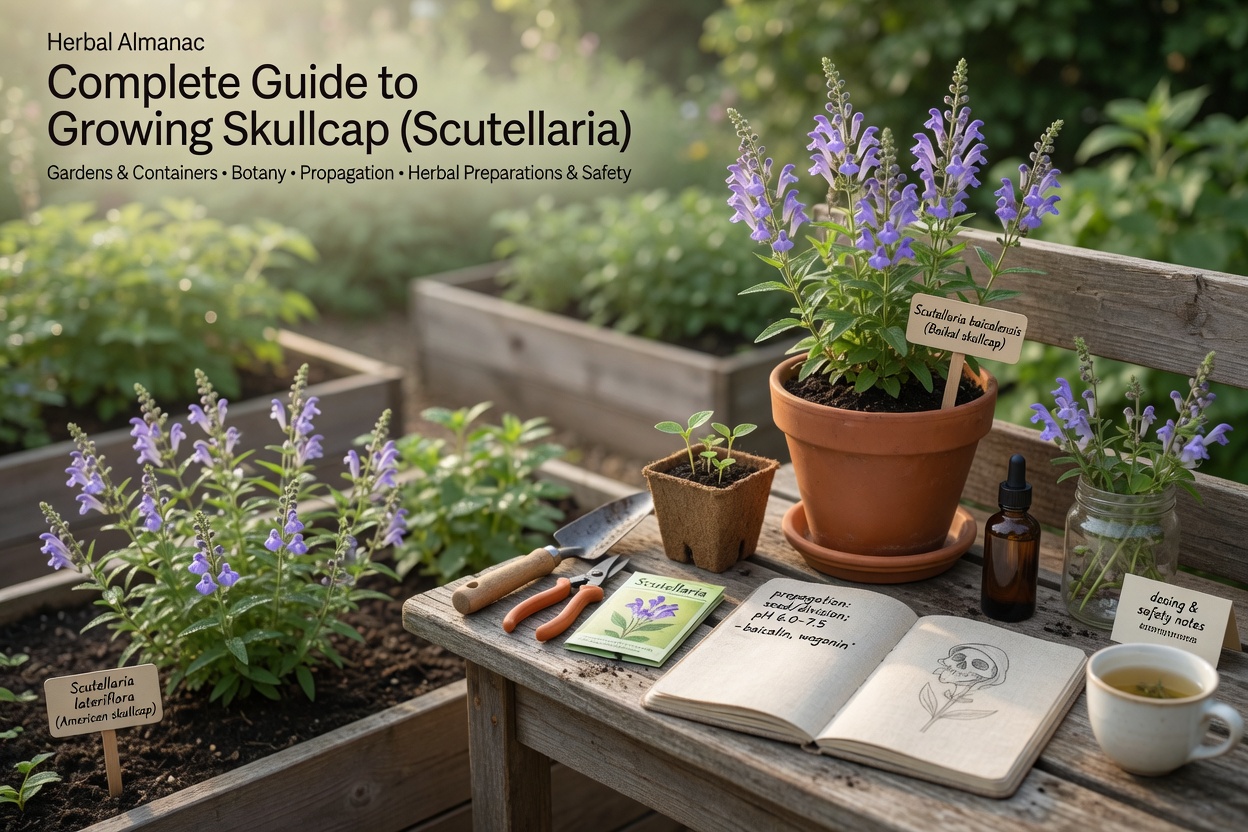
Finally, keep records of plant performance year to year. Tracking which Scutellaria selections thrive in your beds or containers, and noting how plant material performs in teas or tinctures, will let you refine both horticulture and herbal preparations without unnecessary risks. When in doubt about interactions or long-term use, encourage consultation with a trained practitioner and prioritize safe, modest dosing from clearly identified, home-grown stock.