When people consider pairing skullcap with valerian, lemon balm and other calming herbs they are usually aiming to enhance sedation, shorten sleep latency or reduce nighttime awakenings without relying solely on pharmaceuticals. Skullcap has a long record of therapeutic use and is often blended with other sedative botanicals to produce a smoother, more sustained calming effect. Blends can reduce the need for higher doses of any single herb, but combinations also raise safety and interaction questions that need practical answers.
Why skullcap pairs naturally with valerian, lemon balm and similar herbs
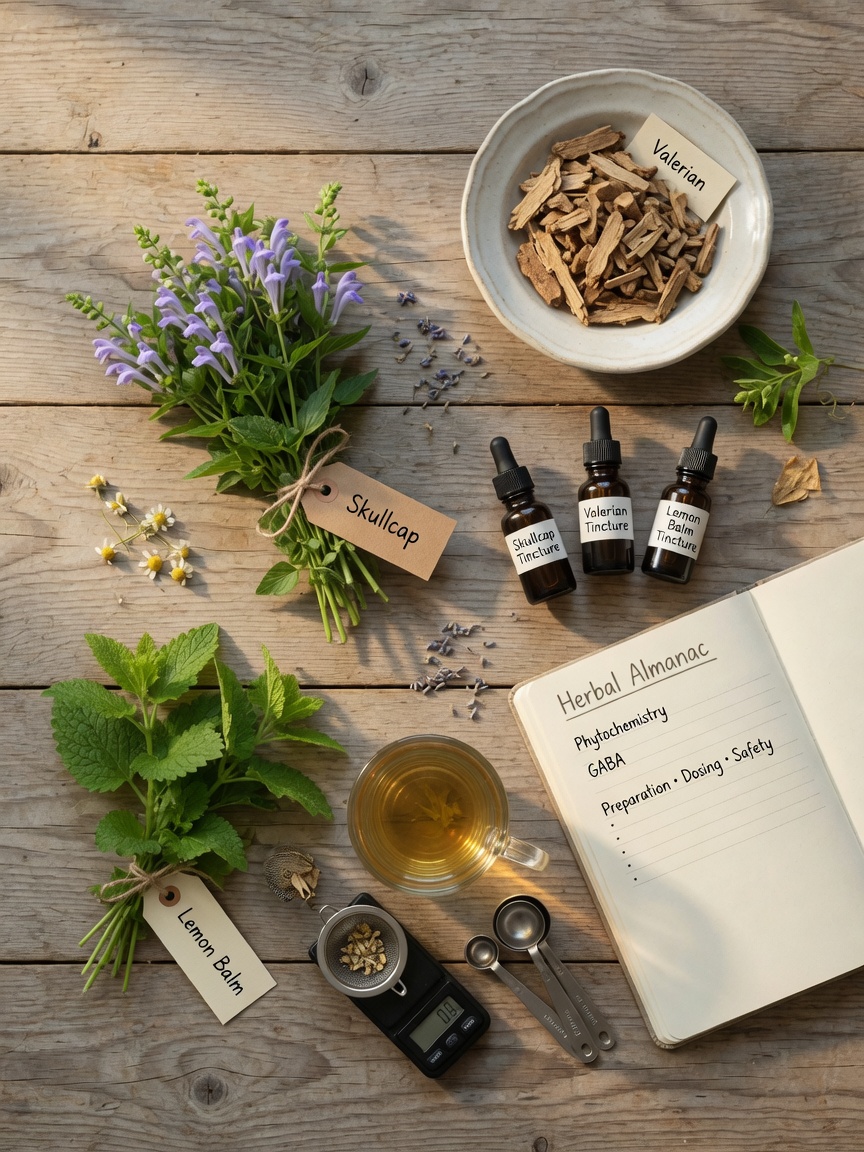
Skullcap (Scutellaria spp.) is frequently used in formulations alongside valerian (Valeriana officinalis) and lemon balm (Melissa officinalis) because each herb contributes complementary actions. Valerian is typically valued for its sedative and sleep‑onset effects, lemon balm for anxiolytic and mood‑stabilizing properties, and skullcap for gentle nervous system modulation. Together these plants are intended to support relaxation, reduce rumination, and promote sleep continuity in mild to moderate cases.
Combination use aims to recruit multiple mechanisms—mild GABAergic modulation, mild sedative receptor activity, and calming cholinergic or serotonergic influences—so a lower dose of each herb can be used. That strategy can lessen single‑herb side effects while preserving benefit, but it also means clinicians and users must watch for additive sedation and interactions with pharmaceuticals.
Phytochemistry, GABA mechanisms and the evidence base
Skullcap contains flavonoids and other constituents that have been studied for effects consistent with central nervous system modulation, and some of these constituents appear to influence GABAergic activity. Valerian and lemon balm have different dominant constituents that can also affect GABA transport, binding, or degradation in experimental systems. These overlapping pathways provide a plausible biochemical rationale for combining the plants to support sleep and relaxation.
For readers who want a concise review of traditional use and clinical evidence that informs combination strategies, the article Skullcap for Anxiety and Sleep: Traditional Use and Scientific Evidence summarizes historical uses and available clinical studies that are relevant when designing blends or comparing single‑herb versus multi‑herb approaches. That review is useful because it helps situate phytochemical hypotheses within published human outcomes when considering synergy and safety.
Formulations, recipes and practical dosing approaches
When preparing multi‑herb formulations the goal is to balance potency and tolerability. A common household approach uses lower quantities of each herb rather than a single concentrated dose; this can be done with infusions (teas), tinctures, or standardized capsules. Typical home preparations emphasize gentle onset: an infusion consumed 30–60 minutes before bedtime for sleep support, or a smaller daytime dose for anxiety reduction.
Below are simple, conservative examples suitable for adults; these are starting points, not prescriptive medical orders. Adjustments should be made by an experienced herbalist or healthcare provider when other medications or conditions are present.
- Calming nighttime infusion: 1 tsp skullcap + 1 tsp lemon balm + 1 tsp dried valerian root per cup; steep 10–15 minutes; drink 30–60 minutes before bed.
- Mild daytime anxiety tea: 1 tsp skullcap + 1 tsp lemon balm per cup; steep 10 minutes; sip up to three cups daily as needed.
- Tincture approach: combine equal parts skullcap and lemon balm with half part valerian; dose 0.5–1 mL (20–40 drops) in water 1–3 times daily depending on concentration.
Safety, interactions, and long‑term considerations
Combining sedative herbs can produce additive central nervous system depression. Users taking prescription sedatives, benzodiazepines, opioids or alcohol should avoid multi‑herb sedative blends unless supervised by a clinician. Skullcap in combination formulations may potentiate drowsiness and impair alertness, so avoid driving or operating machinery until you know how a blend affects you.
Long‑term safety data for many herbal blends are limited. Where possible, use the lowest effective dose, employ intermittent use strategies (e.g., nightly for short periods or as needed), and reassess benefits and side effects regularly. Watch for gastrointestinal upset, increased sedation, paradoxical stimulation in sensitive individuals, or signs of liver stress—seek medical advice if these occur.
Practical steps for safely combining skullcap with other calming herbs
Start by testing single‑herb tolerance. Before combining, take skullcap alone at a low dose for a few nights to assess baseline effects. Then introduce one additional herb—lemon balm or a low dose of valerian—and observe changes in sleep onset, depth, daytime alertness, and any adverse effects over several days.
If the initial combination is well tolerated, you can fine‑tune ratios to emphasize the desired effect: increase lemon balm slightly for daytime anxiousness without heavy sedation, or increase valerian modestly for more pronounced sleep onset effect. Keep records of doses and timing so adjustments are evidence‑based rather than trial‑and‑error.
Consult a healthcare practitioner when combining with medications that affect the central nervous system or when treating children, pregnant or breastfeeding people, and those with serious medical conditions. Container gardeners who grow skullcap, valerian or lemon balm will find fresh leaves useful for mild infusions, but dried material is often preferred for consistent dosing in tinctures and capsules.
In summary, skullcap can be a useful component in multi‑herb formulas with valerian and lemon balm when the goal is calm, improved sleep, or reduced nighttime rumination. Thoughtful preparation, conservative dosing, and careful monitoring for additive sedation or interactions will help maximize benefit while minimizing risk.